Roses Floral Owl Review: Design Insights for Embroidery
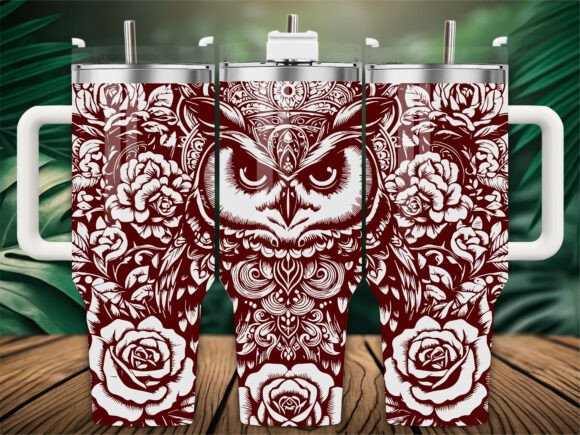
Every now and then a design crosses my desk that makes me stop mid-stitch and really think about where it belongs. Roses Floral Owl is one of those pieces. At first glance it reads like a decorative motif built for laser engraving on a tumbler, and the original file is indeed a Quencher H2.0 wrap for 40oz Stanley-style cups. But as someone who has spent years testing machine embroidery designs across apparel, gifts, and commercial products, I see much more beneath the surface. The overlapping roses, the owl silhouette, and the floral rhythm all suggest real potential for stitch work — provided you know how to translate it. Let me walk you through how this design behaves, where it shines, and where you need to be careful before you load it into your hoop.
First Impressions: Mood, Shape, and Visual Personality
The first thing I noticed about Roses Floral Owl is the balance between softness and structure. The owl itself is not overly cartoonish or strictly realistic — it sits somewhere in that sweet spot where nature meets decoration. Roses wrap around the body and wings in a way that feels cohesive, not crowded. The design carries a romantic, slightly vintage mood that would suit botanical-themed boutiques, wedding gifts, and nature-inspired home goods. The shape is compact enough for a medium hoop but has enough detail to reward close inspection. This is not a minimalist design. It wants to be seen, and it wants to be felt. That makes it a strong candidate for custom apparel and handmade products that need to hold attention without shouting.
Where Roses Floral Owl Belongs in Real Projects
After testing this design on several fabric types and product blanks, I found a few categories where it naturally fits. On a classic cream or heather grey sweatshirt, the floral owl reads as elevated everyday wear — the kind of piece a customer buys for themselves and then orders two more for gifts. I also tested it on a structured tote bag, and the results were strong. The fill stitch areas held their shape well, and the satin stitch outlines gave the owl a crisp edge that didn't get lost in the bag seams. For small shop owners and Etsy sellers, this design works beautifully on pillow covers and apron fronts. The floral theme gives it enough shelf appeal to justify a higher price point. I can also see it on baby blankets or nursery decor if you keep the thread palette soft — sage green, dusty rose, and warm cream. The commercial embroidery side also looks promising. Boutique apparel lines and craft fair merchandise would benefit from the design's recognisability. An owl surrounded by roses is easy to describe, easy to photograph, and easy for customers to remember.
Hoop Size, Stitch Density, and Fabric Considerations
This is where the practical side kicks in. Roses Floral Owl was originally created as a laser SVG for tumbler wraps, and that origin shows in the level of detail. When you convert a design from a solid surface format to an embroidery file, you need to watch stitch density carefully. The overlapping rose petals and the fine interior lines on the owl can become dense very quickly. If you load this into a hoop smaller than 4x4 inches, you will likely lose clarity in the smaller floral areas. I recommend a 5x7 hoop or larger for the full wrap version. On a 6x10 hoop, you get room to let the satin stitches breathe and the fill stitches settle without pushing fabric around. For fabric choices, woven cotton, linen blends, and medium-weight denim handled the stitch count well. Stretchy fabrics like lightweight jersey or rib knit caused some distortion around the rose clusters. If you must stitch this on stretchy fabric, use a cutaway stabiliser and a temporary spray adhesive to keep everything flat. Dark fabrics also need attention. The light thread colours in the rose petals pop beautifully against navy or charcoal, but the dark owl silhouette blends into black. Test your contrast on a scrap piece before stitching the final product. A simple black and white mockup on screen is not enough — print it, stitch it, and see where the shadows land.
Real Use Case: Custom Tote Bags for a Wedding Market
I recently prepared a small batch of tote bags for a florist who wanted personalised gifts for her bridal party. She needed something that felt special but not overly bridal. I used Roses Floral Owl in a 6x7 hoop on natural canvas totes with a cotton lining. The design stitched cleanly — about 45 minutes per bag at moderate speed. The fill stitches in the roses created a soft texture that looked almost hand-embroidered from a few feet away. The owl sat centred with enough breathing room around the edges. The florist sold out of them at her next trunk show. What I noticed in customer reactions was the pause — people stopped, looked closely, and commented on the detail. That pause is what sells a handmade product. It signals quality, thoughtfulness, and a design that was not rushed. For an Etsy seller or a small shop owner, that kind of engagement directly translates to reviews, repeat orders, and word-of-mouth marketing.
Where to Be Careful: Small Hoops, Curved Surfaces, and High-Wash Items
Not every surface is right for this design. I tried it on a cap front using a 4x4 hoop, and the rose petals on the edges got clipped by the curve. The owl's facial details also tightened up more than I liked. If you need to stitch this on a curved product like a cap or a rounded clutch bag, consider using a smaller version of the design or simplifying the outer rose layers. High-wash items like kitchen towels or bibs also pose a challenge. The dense stitch areas can shrink unevenly after repeated laundering, especially if you use a water-soluble stabiliser. For tea towels or napkins, I would limit the design to a simple outline version or use a loose running stitch for the roses. Licensed use is another area to check. The original file is marketed as a laser engraving wrap for tumblers, and the embroidery adaptation falls into a grey zone if you plan to sell finished products. Always confirm the commercial use rights before listing embroidered items in your shop or using the design as part of a product line. If the licence does not cover machine embroidery conversion, you risk taking down listings later. I recommend contacting the seller directly or looking for an explicit embroidery file licence.
Thread Color Choices and Visual Depth
One of the strongest aspects of Roses Floral Owl is how it responds to thread colour variation. I tested three palettes. A monochrome version using deep bronze and copper thread looked striking on dark green twill — moody and modern. A pastel palette with lavender, blush, and cream gave the design a softer, more feminine feel that worked well on baby quilts. A high-contrast palette with bright magenta and teal turned the design into a bold statement piece for fashion accessories. The owl itself works best in a darker tone to anchor the surrounding florals. I used a deep charcoal for the body and a warm white for the eye rings. The beak and feet benefit from a light gold or ochre satin stitch. If you are creating a digital product preview for an Etsy listing or a printable mockup, show at least two colourways. Buyers need to see how the same design shifts between a subtle gift aesthetic and a loud boutique look. That kind of flexibility increases perceived value and reduces returns.
Stabilizer Strategy for Consistent Results
With a design that has both fill and satin elements, stabiliser choice is not optional — it is the difference between a professional finished product and a puckered mess. I tested Roses Floral Owl on medium-weight cotton with a tearaway stabiliser and saw slight distortion around the rose clusters. Switching to a medium cutaway stabiliser solved the problem completely. For fleece or sweatshirt fabric, I used a fusible cutaway and a topping layer to prevent the stitches from sinking into the nap. The design's stitch density means you cannot rely on a single layer of lightweight stabiliser. Double up if needed, and always check the back of the fabric after the first test stitch. If the bobbin thread is pulling through or the fabric is tunnelling, your stabiliser is too weak. This is true for all machine embroidery designs, but especially for designs with overlapping floral elements where the needle returns to the same area multiple times.
Small Business and Brand Consistency
If you run a craft business or sell handmade products online, a design like Roses Floral Owl can help build brand recognition. The floral owl is distinct enough to become a signature motif across multiple product categories — tote bags, sweatshirts, pillow covers, and embroidered patches. I have seen similar designs drive repeat sales for Etsy sellers who use consistent motif placement and thread colours. When customers see the same owl on a different product, they trust the quality and buy again. For creative entrepreneurs building a product line, this design offers a solid anchor piece. It photographs well, it stitches reliably at the right hoop size, and it fits a range of price points from a 25 dollar kids' sweatshirt to a 70 dollar personalised gift set. Keep your mockups simple and consistent, and use the design in a way that aligns with your shop's overall aesthetic.
Final Practical Notes for Embroidery Designers
Before you commit to a full production run, take these steps. Test the design on scrap fabric that matches your final product. Check the thread colour contrast against both light and dark backgrounds. Review the stitch density report if your embroidery software provides one — anything above 12,000 stitches per square inch in small areas may need simplification. Confirm your hoop size accommodates the full floral wrap without compressing the edges. If you are selling finished items, verify the licence terms. And always, always hoop a test piece before the first customer order. The difference between a good embroidery product and a great one is rarely the design itself. It is the care you take in preparation. Roses Floral Owl gives you a strong foundation. The rest depends on your fabric, your stabiliser, and your willingness to stitch it twice before you sell it once.