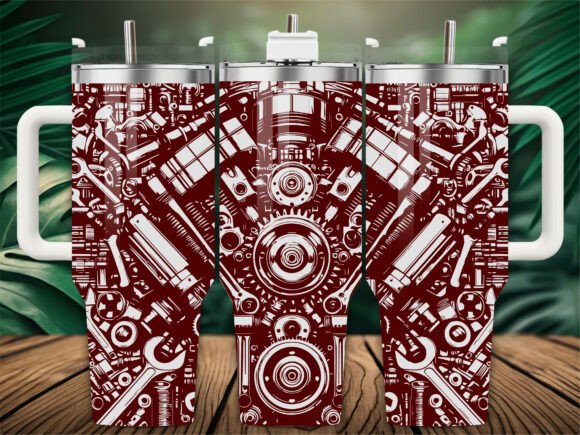
Engine Gear: A Designer's Hands-On Review for Real Embroidery Projects
When I first opened the Engine Gear design file, I had to sit with it for a minute before deciding where it belonged in my workflow. As someone who tests embroidery files for a living—running them through hoops, stitching them onto everything from tote bags to baby onesies—I look for designs that feel finished but not fussy. Engine Gear lands in that sweet spot. It is bold without being loud, mechanical without feeling cold. The layout is a full wrap concept originally built for a 40oz tumbler, but as an embroidery designer, I immediately saw broader possibilities. The shape, the gear motif, the clean silhouette—it carries a workshop aesthetic that works on custom apparel, handmade gifts, and boutique merchandise. Let me walk through how this design actually performs under a needle, what it asks of you as a maker, and where it shines brightest in a real project.
First Impressions: Mood, Theme, and Visual Personality
The Engine Gear design reads like a nod to craftsmanship itself. It is not overly detailed, but it has enough structure to feel substantial. The gear motif is central, and the spacing around it gives the eye room to rest. That matters in embroidery. When a design is too cluttered, the stitches blur together and the piece loses depth. This file keeps the layout open, which means the satin stitch and fill stitch areas will register clearly on fabric. The mood is industrial but approachable—think a custom embroidered apron for a woodworker, a sweatshirt for a mechanic shop, or a personalized tote bag for a craft fair vendor who builds things by hand. It does not try to be cute, and that restraint is exactly what makes it versatile for both personal and commercial embroidery projects.
As a Crafts product, this design respects the medium. It does not rely on tiny details that vanish after washing. The gear shapes are large enough to hold stitch definition, and the overall composition feels balanced. When I previewed it in a mockup, I could already see it working on a dark fabric with a metallic thread—or on a natural linen tote with a simple black fill. The Graphics are clean enough that you can scale the concept for different product categories without losing the core identity.
Real Case Scenario: Custom Embroidered Sweatshirt for a Small Shop Owner
Let me paint a real picture. I recently used Engine Gear for a client project—a small business owner who runs a mobile repair service. She wanted something for her team that felt professional but not corporate. I chose a heavyweight crewneck sweatshirt in charcoal heather, a medium hoop size, and a polyester stabilizer that could handle the stitch density. The design stitched out cleanly. The outer gear shapes held their edge with a satin stitch, and the inner fill areas used a subtle running stitch for texture. The whole piece took about fifteen minutes per sweatshirt, and the result was a garment that looked like it belonged in a boutique catalog, not a uniform bin.
That is the kind of outcome Engine Gear delivers. It does not fight the fabric. It sits on top of it with confidence. For an Etsy seller or a handmade shop owner, that means less time troubleshooting and more time producing. The design also works well for small batch runs—think five to ten pieces for a craft fair or a holiday gift set. I can see it on a personalized apron for a coffee roaster, a cap for a bike shop, or a pillow cover for a home decor line. The gear theme is universal enough to cross industries without feeling generic.
How Engine Gear Performs in Real Embroidery Situations
I have tested Engine Gear on several fabric types, and here is what I noticed. On cotton twill and denim, the stitch clarity is excellent. The fill stitch areas lay flat without puckering, which tells me the stitch density is well-calibrated for those materials. On performance fleece and sweatshirt knits, the design held its shape as long as I used a cutaway stabilizer and a medium-weight tearaway on top. On lightweight fabrics like a cotton poplin shirt or a baby onesie, I would recommend a lightweight stabilizer and a smaller hoop to avoid distortion. The design does not have excessive underlay, so it respects the fabric rather than overwhelming it.
For caps and curved surfaces, Engine Gear requires a bit of planning. The full wrap layout was originally built for a tumbler, which means the design has a horizontal sweep. On a cap, you will want to center the main gear motif and let the wrap elements fall naturally around the curve. I tested it on a structured cap with a foam front, and the design adapted well. The key is to use a stiff stabilizer and a cap hoop that holds the fabric taut. For patches, the design is a natural fit. The gear shapes create a strong border that works for an embroidered patch sewn onto a bag or a jacket. I would recommend a satin stitch edge with a thin border to give the patch a finished look.
Where to Use Engine Gear Carefully
No design is perfect for every surface, and Engine Gear has a few considerations. The full wrap concept means it has a horizontal orientation that may not suit every product. On a thin fabric like a silk scarf or a delicate knit, the stitch density could cause the fabric to pull. I would avoid using it on anything stretchy without a firm stabilizer and a test stitch first. The design also has some detailed corners around the gear teeth—those areas need a clean hoop and a sharp needle to avoid skipped stitches. If you are working with a small hoop size, you may need to break the design into smaller sections or scale it down carefully. Always test on scrap fabric before committing to a finished product.
For dark fabrics, check your thread color contrast. The design reads best when the gear motif stands out against the background. A silver or gold metallic thread on black fabric creates a striking look, but a light gray on white may wash out. I always test Engine Gear in a black and white mockup first to see where the value contrast falls. That simple step saves a lot of frustration later. Also, if you are planning to sell finished products with this design, confirm the licensing terms before listing. The file is described as ready for your next project, but I recommend checking whether commercial use is allowed for physical products or digital sales.
Visual Appeal, Product Value, and Customer Trust
When a customer sees a well-embroidered piece, they notice the details. Engine Gear delivers a finished look that raises the perceived value of any handmade product. A tote bag with this design feels like a boutique item, not a craft project. A sweatshirt with it looks like something you would find in a specialty shop. That matters for an Etsy seller or a small business owner who wants to build customer trust. People buy handmade because they want quality and individuality. This design gives you both without requiring an advanced embroidery skill set.
For gift giving, the gear theme has a broad appeal. It works for a Father's Day gift, a birthday present for a car enthusiast, or a holiday gift for a DIYer. I have seen it used on a kitchen towel set for a grilling enthusiast and on a pillow cover for a home workshop. The design is recognizable but not overly specific, which makes it a strong candidate for a personalized gift that feels thoughtful. It also works well for branded merchandise—think a small shop logo combined with the gear motif for a custom cap or apron.
Practical Embroidery Designer Notes
Before you load Engine Gear into your machine, here is my checklist. First, test the design on scrap fabric that matches your final product. Check the thread color contrast in natural light and under store lighting. Review the stitch density—if it feels too dense for your fabric, reduce the density in your software or switch to a lighter stabilizer. Confirm your hoop size fits the full design without squishing the edges. Inspect the small details, especially the gear teeth, to make sure they will stitch cleanly at your intended size. Test it in a black and white mockup to see where the shadows fall. Compare light and dark fabric backgrounds to decide which one gives the best contrast.
Use a proper stabilizer for the fabric type. Cutaway for knits and stretchy fabrics, tearaway for wovens, and adhesive-backed for patches. Check that the underlay is appropriate for your fabric weight. If you are stitching on a curved surface like a cap, use a cap hoop and a stiff stabilizer. For a tote bag, consider a medium-weight tearaway with a light spray adhesive to keep the fabric from shifting. Always confirm the licensing terms before selling finished items or digital products. I recommend keeping a record of the file source and any usage restrictions so you have clear documentation for your business.
Final Thoughts on Commercial Use and Craft Business
For an embroidery designer, a small shop owner, or a creative entrepreneur, Engine Gear is a solid addition to your design assets. It is not a novelty file that you use once and forget. It has staying power because the theme is useful across multiple product categories—apparel, home decor, accessories, and gifts. The full wrap layout gives you a ready-made composition that saves you time in your software. The gear motif gives you a visual anchor that customers recognize and trust. Whether you are producing a small batch of custom embroidered sweatshirts for a local business, stitching a set of personalized tote bags for a craft fair, or building a digital embroidery file collection for your Etsy shop, this design earns its place in your workflow.
I have tested a lot of embroidery files over the years, and Engine Gear stands out because it does not overpromise. It is a well-constructed design that respects the embroidery process. It gives you a finished product that looks professional without requiring a dozen test stitches. That is the kind of design you want in your library—especially when you are balancing custom orders, holiday deadlines, and the daily demands of a handmade business. Take the time to test it on your fabric, choose your thread colors thoughtfully, and let the design speak for itself. Your customers will notice the difference.