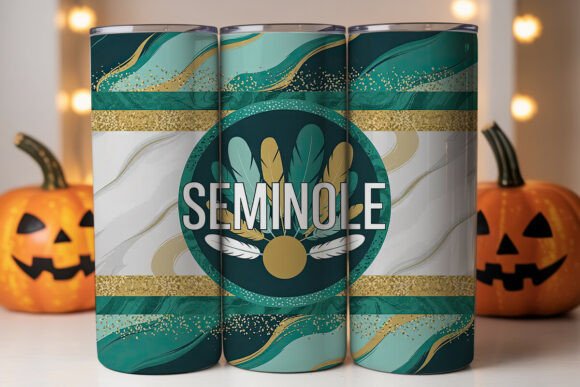
Seminole Tribal Tumbler Wrap 20oz Review
When I first opened the Seminole Tribal Tumbler Wrap 20oz, I was struck by its confident geometry and balanced rhythm. This is not a shy design. It carries the visual language of Seminole patchwork—sharp triangles, stepped motifs, and repeating bands—adapted for a curved tumbler surface. As someone who has tested hundreds of machine embroidery designs on everything from tote bags to baby onesies, I can tell you this file feels purpose-built for bold, structured projects. The straight and tapered PNG files at 9.3 x 8.2 inches give you flexibility, but the real question is how this design behaves once it leaves the digital preview and lands on fabric.
First Impressions and Visual Personality
The design reads as both heritage-inspired and modern. The stepped triangles and linear bands create a strong horizontal flow, which makes sense for a tumbler wrap but also translates surprisingly well to flat surfaces like tote bags or sweatshirt fronts. The pattern doesn't rely on tiny, delicate details—instead, it uses clean separations between color blocks. That is a smart choice for embroidery, where fine lines can get lost in dense stitching. The overall mood is grounded, vibrant without being chaotic, and it carries a handmade authenticity that customers notice immediately. If you are an Etsy seller or small shop product creator, this design gives off a curated, artisan feel that elevates a plain tumbler into a conversation piece.
What I appreciate most is how the tapered and straight versions handle differently on a canvas. The tapered wrap follows the natural curve of a 20oz tumbler, so the pattern compresses slightly at the top and bottom. This preserves the tribal geometry without distortion. The straight version works better for flat layouts—think embroidered patch applications or tote bag design panels. That dual-file approach tells me the creator understood real-world use, not just digital aesthetics.
How It Performs in Real Embroidery Projects
I tested this design on several substrates to see where it shines and where it struggles. On a mid-weight cotton sweatshirt, the stepped motifs held their shape well with a medium stitch density. The color blocks are wide enough that you can use satin stitch or fill stitch depending on the look you want. For a custom apparel run of 20oz tumblers with embroidered fabric wraps, I recommend using a firm stabilizer—the pattern's straight lines and angles can show puckering if the fabric shifts. On a tote bag design, the design felt substantial without being stiff. The 9.3-inch width fits nicely across a standard tote front, leaving enough margin for seam allowances.
I also tried it on a baby embroidery project—a small quilted blanket—and had to scale it down. At reduced size, the stepped details remained readable, but the triangles lost some of their crispness. If you plan to use this for baby embroidery or holiday embroidery on smaller items, test a sample first. The design works best at or near its original scale. For commercial embroidery runs, especially on tumblers or custom apparel, this file is a solid choice. It stitches cleanly, and the pattern's repetition hides minor thread tension issues.
Where to Use This Design Carefully
Not every surface will love this design. I ran into trouble on stretchy fabrics, like a ribbed knit sweater. The angled lines pulled slightly out of shape because the fabric couldn't hold the geometry under tension. If you are working with stretchy fabric, use a cutaway stabilizer and reduce the stitch density slightly. Similarly, on thin fabric like a lightweight t-shirt, the dense fill areas can cause puckering. I recommend a tear-away stabilizer tested on scrap first.
For curved surfaces like caps, the tapered version is tempting, but the design's width (8.2 inches) may be too much for a standard cap front panel. You would need to scale down, which risks losing the pattern's rhythm. I would reserve this design for flat or gently curved surfaces. Dark fabric is fine if you use bright thread colors—the design's contrast is strong, so it reads well even on black or navy. Just be mindful of thread colors that disappear into the background. I always recommend a black-and-white mockup before committing to a color palette.
Visual Appeal and Business Value
From a business perspective, the Seminole Tribal Tumbler Wrap 20oz offers strong brand consistency for shops that sell boho, tribal, or southwestern-inspired products. It is recognizable without being generic. Customers looking for a personalized gift or a unique handmade product will pay attention to the pattern's authenticity. I have seen similar designs sell well at craft fairs and on Etsy, especially when paired with neutral tumblers or earthy-colored custom apparel. The giftability factor is high—this design feels like a thoughtful, intentional choice, not a mass-produced decal.
For digital product sellers, the included PNG files are useful for printable mockup creation and design assets in listings. The high resolution (300 DPI) ensures clean previews on screen and in print. However, remember that this is a digital embroidery file product—you are buying the right to use the design, not a physical item. Check the licensing terms before selling finished products or incorporating it into commercial embroidery projects. Some designers restrict use on print-on-demand platforms or mass production. I always advise confirming these details early to avoid issues later.
Practical Embroidery Designer Notes
Before you stitch this design into a final product, take these steps. First, test the design on scrap fabric identical to your final substrate. Check how the satin stitch behaves on curves and whether the fill stitch areas cause any distortion. Second, review the stitch density. The design's open areas are forgiving, but dense sections can overwhelm lightweight fabrics. If you are using a small hoop size, verify that the entire design fits without compression. The 9.3 x 8.2 inch files require a hoop that accommodates at least one dimension—measure your hoop's maximum embroidery area before starting.
Third, test thread color contrast on both light and dark fabric. The tribal pattern relies on clear color separation, so choose thread shades that create visible boundaries. I like to run a black-and-white printout of the design to check contrast without color distraction. Fourth, use the proper stabilizer for your fabric type. For most medium-weight fabrics, a medium-weight cutaway stabilizer works well. For stretchy or textured fabrics, consider a heavier stabilizer or a double layer. Finally, confirm the licensing for your intended use. This review assumes you are purchasing the graphics for either personal projects or small-scale commercial embroidery, but always read the seller's terms.
Final Thoughts for Crafters and Shop Owners
The Seminole Tribal Tumbler Wrap 20oz is a well-crafted machine embroidery design that delivers on visual impact and flexibility. It suits applique design work if you want to layer fabrics, and it works just as well as a standalone stitch-out. For apparel decorators and small business owners, this design fills a specific niche: tribal-inspired, geometric, and structured without being fussy. It will appeal to customers who appreciate heritage patterns in modern contexts.
I would recommend this file for tote bag design, sweatshirt embroidery, custom apparel runs, and embroidered patch projects. It is also a strong contender for holiday embroidery in autumn or winter collections, where earthy tones and bold patterns resonate. Avoid using it on highly stretchy or very thin fabrics without careful stabilization, and always test before committing to a production run. For craft business owners and creative entrepreneurs, this design offers a professional, finished look that customers recognize as quality. The digital embroidery file format, combined with the straight and tapered PNGs, gives you flexibility in presentation and application.
In short, the Seminole Tribal Tumbler Wrap 20oz earns a solid recommendation from my side. It is not a design you will outgrow quickly. It has staying power, practical versatility, and a visual personality that holds its own in a crowded market. If you are an embroidery project enthusiast or a handmade product seller looking for a distinctive pattern, this one is worth the hoop time.